


Answer:
Yes. This is another consequence of those advantages of binary.
Host and Client Computers
The applet bytecode and the Web page are both located on a hard disk of a host computer.
Of course, when your browser asks for them, a copy of the Web page and a copy of the bytecodes are transmitted over the Internet to the main memory of your computer. Your browser now formats a nice picture of the Web page and runs the bytecodes using its version of the Java Virtual Machine.
This is a slightly weird idea. Just 10 years ago it would have been unthinkable in all but the most advanced university computer science departments. Here is a picture:
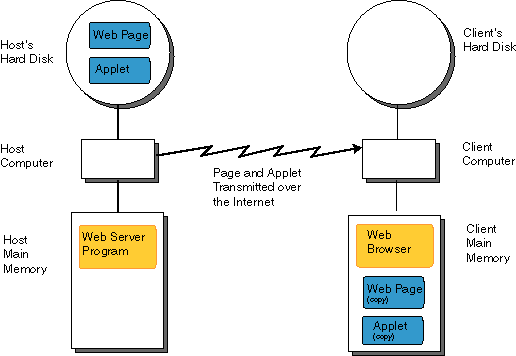
The browser on the client (your home computer) uses information in its main memory, that has been copied from the host's hard disk. It is as if the whole Internet works as your computer's secondary storage.
QUESTION 4:
Could many different home (client) computers simultaneously be showing the Web page and running the applet?